Holding onto the experience
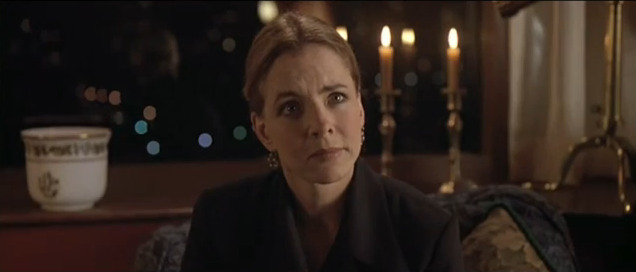
And we turn him into an anecdote to dine out on like we’re doing right now. But it was an experience. I will not turn him into an anecdote. How do we keep what happens to us? How do we fit it into life without turning it into an anecdote with no teeth? A punch line you’ll mouth over and over years to come “Oh, that reminds me of the time that impostor came into our lives” “Oh, tell the one about that boy…” And we become these human jukeboxes spilling out these anecdotes… But it was an experience. How do we keep the experience? – Luisa, Six Degrees of Separation

I see a world that’s tired and scared
Of living on the edge too long […]
Night after night I know I should leave
But there’s something in those eyes
That keeps me hanging on
I’m hypnotised
It breaks my heart and I don’t know why
– Blue Rodeo, ‘Rose Coloured Glasses’
We’re craving connection – we always did, we always will. We hide behind screens, and console ourselves with interactions and hugs from friends and family, perhaps telling ourselves we have the social networks to keep ourselves going in times of crisis.
And times of crisis – a true feeling we are trapped in the maxim ‘may you live in interesting times’. Are we in crisis – our reality of what it means to be a civilization, and who is in that civilization? This week, more than many in memory, feels like crisis. And then one goes back to news of the year – the past couple of year, and names of cities across the world where violence jars the reality. Not just moments of Paris, Istanbul, Orlando… the list, too painful, the vigils, too many. Is this what they felt like during 1968, during years where the news stories of violence both overseas and in your country filled up the news night after night? The violence starts to permeate your consciousness. On a day to day level, little may change. You still get up and buy your coffee, run to catch that bus, plug in your phone, make dinner, make your life. But when the news continues to pound your heart day after day with stories of violence and ignorance, death and destruction towards values of human connection and community, it can wear you down. It can have you question what effect one person – citizen, designer, anyone, really – can have on anything. How do you learn to cope, to reconcile what you know so much of life is, that goodness, when so much of that destruction threatens it? This is a navigation not from a point of emotional crisis or depression necessarily, but something deeper – a search for meaning, to see if meaning can come from madness. When madness and despair are the narrative that shapes a current reality, what meaning can come of it? What meaning and synthesis can we make from the failures of systems, from the disconnection some feel, for a need for violence? And how do we cope when the story of humanity is one of so much progress in the face of such madness? The creativity and inspiration of so much of what we’ve achieve, but also moments of horror, and the relentless burden to try and make sense of all of this story – the good, the bad – and to see where this fits in a narrative for the future so that we can create actions, movements and connections that amplify and explosively propel so much more hope, love and good despite the threat that hate provides.
Some days it feels like the worst possible time in the world to be working on a thesis for graduate school. It also feels like perhaps the worst time in the world to be doing a thesis in a design school. We speak of design interventions, but is a design going to hit at the heart of ignorance that leads to hatred, that can lead to violence? A response that says ‘don’t bother acting, and live in cynicism’ isn’t an appropriate response, either. You can have doubts that design can and will make a difference – but your relationship to design, your craft and profession and calling, still propels you on. As a relationship, the ability to explore a topic and create a solution that can address a situation is seductive – like every great love, it renews itself with every positive moment, and with every despair, it sends you questioning the purpose and choice and why made it. I still feel there’s a role in having design do something in creating connection, helping us make meaning and create analysis that depicts and helps analyze truth. I think of forensics, retroactively going back to understand facts to create a timeline of a kind of truth, to allow for some kind of meaning. The idea of making meaning rather than truth – an one Objective Truth – is a sense here, that design is part of that ‘meaning making’, and to see what comes out of that. That meaning is the heart of connection isn’t saying anything new – nor is it that design and the arts are a way to analyze, to make sense, to see affirmations of greater connections. We share songs to heal from pain, and we so often crave human connection after tragedy – in groups, often, to lay a flower and light a candle to mourn and make sense of a universal story of what it means to be human in the face of violence. To affirm our participation in a greater narrative and greater story of existing as species when violence threatens to rewrite that narrative – that is the task of the designer, and artist, too, to affirm how to be a member of a greater group. With apologies to Samuel Beckett’s concept that ‘to find a form that accommodates the mess, that is the task of the artist now’, perhaps for this week we play with the idea that finding moments to live and highlight connection despite the messes is the task of the artist, designer and citizen for us now.
And here, three examples I have in this post – in film, in music, in a story from a stranger that depict those moments of connection and making meaning, of crafting a depiction of a current state, to bear witness. The arts have been our collective archive of making meaning – the Dylan, the modern, the ancient, the many who sing songs of connection and use their paintbrushes and typewriters to document that connection. In times of pain and loneliness, I go back to the music of my youth and formative years, growing up where songs of hope from Canada helped me navigate a confusing world. That depicting of a current state and bearing witness is what Tom Cochrane, Canadian singer-songwriter, described in his music, describing his songs as sonic photographs. A song as a way to capture a photo, a moment of connection and reality. That idea of a moment of connection captured is part of what I want to explore – what the role of place and the arts, and yes, design, is in creating those moments? What is the role of physical space in creating these moments, and to create a safe space to make connections, and to have a place to go to explore negative feelings? Can design become a experience – not a sonic photograph, not a sonic experience or place – but something? Are there ways to create those connections across diverse groups, too to work towards commonality and recognize they exist, and to have those moments heal us? #PorteOeurvre and moments where strangers connect with one another are examples of working towards commonality and a recognition of shared values, facilitated moments of connection – a hashtag – ironically triggered by violence. I had originally seen this as how we make more of these moments happen, where two people in a convenience story have a moment of clarity and connection, to see if there’s a way to make more of these stories happen more, to try to amplify the ingredients where more of these moments of connection happen. I also know these moments by themselves will not address systemic issues, ways of thinking of one another. Our reality and understanding of it is shaped by millions of these moments banded together, synaptic senses of what has happened before, and moments that go to shape your understanding and perception of fact and emotion, and ultimately your connection. And those moments perhaps go back to the first moment – that great cup of coffee or hug from a stranger reminding you of that first connection (thinking here of Plato’s forms) – and that much work remains in trying to create the meaning of those moments to keep connection despite pain, and to not lose what is good about humanity and how we deal with one another. And those moments of connection and transcendence are what are hard to craft because they’re not an object or an experience so much as part of us, our essence – and to try to shape the ingredients of deep, meaningful, transcendent connection can be impossible. Perhaps what makes them so transcendent is that they are organic, not designed, uncontrolled, spontaneous – and that’s what makes them rare and temporary. I have to believe we still need to make them happen more frequently, less temporary. There’s a need for them, and I don’t think more moments of connection will have them lose their meaning. If anything, wouldn’t the meaning become even more powerful, and wouldn’t that power be a way forward?
Holding onto the experience, creating the connection, making the meaning is where my heart is. The question is now how to make my brain tell this story – and document that moment of clarity of being able to tell this story well.
– July 9th, 2016