
Grad School

Imagine the worst happens—and disaster follows.
Imagine disaster hits, and you must negotiate goods and services without the Internet. How do you track what communities need? How do you move supplies between groups when you are stuck in place? Whose needs come first? How do you coordinate, feed everyone, and keep everyone healthy?
How do you make sure everyone is okay?
The image above is from an exercise exploring how to design for resilience in disaster preparation – years before pandemics, with climate change and the complexity of cities in our mind – how do we make sure we’re all going to be all ok?
The course – Designing for Communities in Disaster – was part of the MFA in Transdisciplinary Design program at Parsons School of Design, within the New School. I wanted to learn how to design for a world of complex adaptive systems and wicked problems. I will always love UX design, but I wanted something more – not only to gain skills in physical products and services, but also a chance to blend my strengths in analysis and creativity to shape a new field of design, what the school refers to as Transdisciplinary Design.
This two-year Master’s program within the School of Design Strategies at Parsons focuses on collaborative design-led research and a systems-oriented approach to social innovation and service design. It covers design ethics, design thinking, human-centered design, service design, social innovation, systems thinking, and the future of a transdisciplinary design practice. There’s a great summary of the TransD program from Gui Curi, a former classmate a year ahead of me.
As a designer, I’ve had opportunities to do UX-related work with screens while at Parsons, but I have deliberately challenged myself not to design more screens. Instead, I want to address both the macro of systems and the micro of human behavior and culture. TransD means learning new methods, ways of thinking, and technological skills, while also creating new objects, new ways of presenting them, and perhaps new forms of design that better address wicked problems. It’s a thinking-through-making set of courses that emphasizes prototyping, co-creating with and not for clients, social innovation, community resilience, and evolving our knowledge of what it means to be a designer in 2016. Rather than focusing on blending design and technology and putting a Chip In Everything or creating an Adaptive Smart City Mobile Predictive System-like thing, the TransD program, in my view, seeks to create a new kind of designer who can evolve their skills and approaches to design for a new kind of world and the unanticipated challenges society will face in the 21st century.
It’s a crucial program if we want designers to learn how to evolve and meet those challenges in a time of rapidly accelerating change.
Looking at all I’ve done in the span of two years, it was a busy 2 years:
- Year 1: First semester studio on disaster and community, Design Led Research, Second semester studio on Speculative Design, Design in Dark Times, Urban Interaction Design, Collaborating with Urban Communities
- Year 2: Final semester studio on end of life and design, Professional Communications, Urban Commons, Thesis Preparation, Thesis Course (weekly progress on Masters thesis)
First Year: exploring the ideas for thesis

First semester studio
This studio course with Matham Ratinam examined community resilience in the context of disaster preparedness and how designers can respond by creating interventions during a humanitarian disaster. We created 5 projects, including a field guide proposing a new community service on resilience and cultural sensitivity, co-creating a workshop on resilience and new services in the community, a future speculative design project on identity, ID cards, and QR code system, and exploring designer-as-doula via 3D fabrication, the Memory Spot project. This helped inspire my thesis by thinking about resilience as a goal in our work, and to focus on the emotional landscape experienced under stress – something I would take further in dealing with mental illness. It was also a course that got me interested in exploring mediums, since the ‘ingredients’ we used – paper, 3D prototyping, workshops, Web and more – served as a nice tour of possibilities to think of for the eventual thesis. View the case study

Design Led Research
This course with Mai Kobori and Raoul Rickenberg focused on learning the basic methods of ethnographic research, especially as tied to design thinking and the product development lifecycle. This was a chance to both learn about the variety of methods and teach fellow classmates during a combination of assignments, workshops, and lessons we taught, and push the bounds of what we understand our role as designers is or should be. I created multiple assignments, including a paper prototype of a ‘speculative design’ Lotus Flower, to share findings from several of them. This class helped inspire my thesis through explorations of when to conduct traditional information gathering and when to engage in more participatory design activities in order to learn and explore potential interventions. View the case study.
Second semester studio
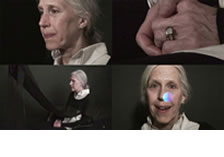
This course with Tony Dunne and Fiona Raby explored how driverless technology would shape our not-too-distant world, and the intersection of speculative design and biochemistry became what I submitted, exploring a future biochemical system for social control, including film (pictured above), projection mapping, digital design, performance, and wearable clothing. (Yes, it was a lot). This helped inspire my thesis by thinking about the role of strangeness in objects as a way to connect emotionally to the world – that how futuristic we design our artifacts will help us understand what control, power, and communities can do, especially around issues of diagnosis for illness.

Urban Interaction Design
This course with Carlos J. Gómez de Llarena focuses on how to understand designing at an urban scale within cities using design. This was a class exploring the future of Smart City technologies and their implications, as well as how to use existing urban interaction design work, like LinkNYC, to integrate with our world, ideally to achieve some level of social change. By the end of the 12-week class, we had created 4 projects, including encouraging engagement in public spaces via urban design, creating new urban furniture to support green behavior, exploring urban mapping/GIS to understand community issues, and exploring future cities and speculative design. This inspired my thesis by thinking about issues of scale – did I want to work at the individual level or larger groups, and what role space plays in an intervention.
Collaborating with Urban Communities
This course with Cynthia Lawson and Fabiola Berdiel focused on learning how to design with communities out in the community using prototyping to affect social change, and incorporated work from community development into the design thinking methodology to evolve how we can design out in the communities we work with. This culminated in using strategic design and product management to create a mobile app to address food insecurity for the New School community. This class helped inspire my thesis by going from research to an actual prototype using a more structured framework (tools such as a log frame template), and would help me consider the role of community-centered design in my work.
In my first year, there were at least 5 ‘major’ papers (including for the Design for this Century course), and 3 manifestos on the future of design, ethics, and the changing role of designers, a debate (I was enthusiastically ‘for’ speculative design), and other smaller assignments. One manifesto was published in Plot(s), the Journal of Design Studies at Parsons, in July 2016, and one paper on one of my studios was presented at the American Society for Theater Research in November 2016.
Second Year: designing and delivering a thesis

Final semester studio
This studio course with Patty Beirne and John Bruce explored how design can help families with terminal illness and at the end of life, and examined the use of strategic research, prototyping, and video ethnography to create solutions that address deeply sensitive topics. This image is of one of our presentations introducing our research and storyboard for our film – and the first glimpse of our ‘users’. This class helped inspire my thesis probably the most of all of my courses, because it gave me the courage to design for a stigmatized topic and to focus on emotion-centered design as a focus, pushing me to challenge myself in a way I hadn’t ever before. View the case study.
Professional Communications
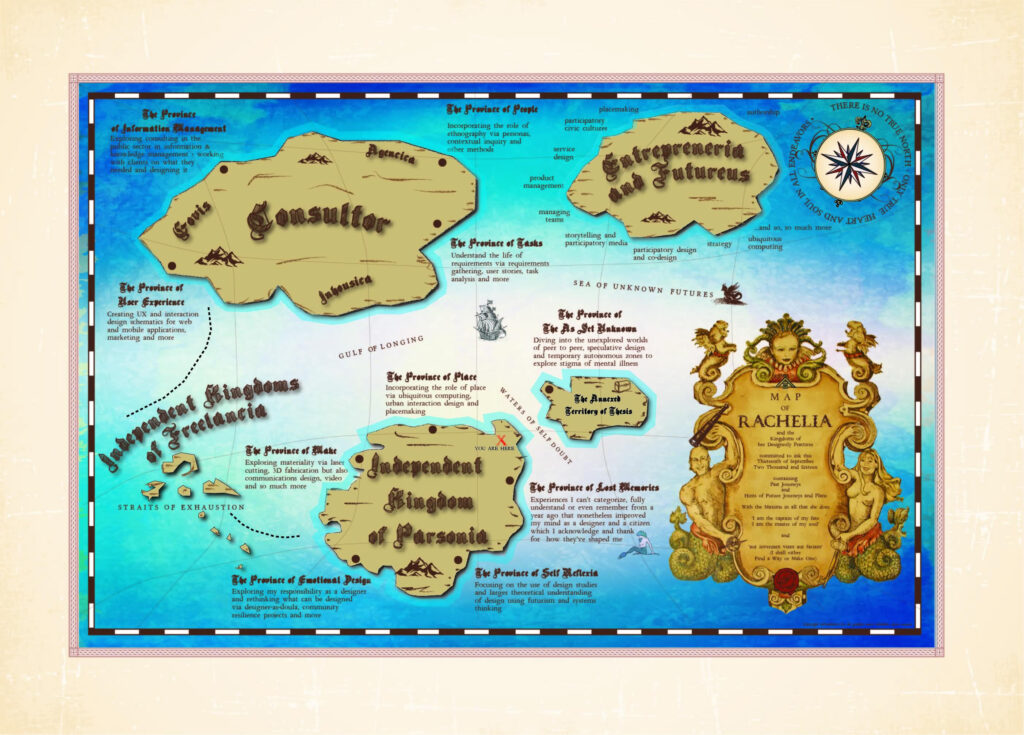
This course with Amanda Ramos, Clare Watson and Manuel Toscano explored what it means to be a designer for now and in the future, and in particular what it means to be a Transdisciplinary Designer. We examined these topics in more depth during this course, including understanding our unique brands and possible directions for future work. It also involved refining our pitches, portfolios, and our TransPlan – where we’ve come from, and where we’re going, something captured in the image to the left. This helped inspire my thesis by thinking about how best to present my unique perspective on a topic and how to brand myself in a way that feels authentic but also proactive, assertive and authoritative,
University Trans Lab: Urban Commons
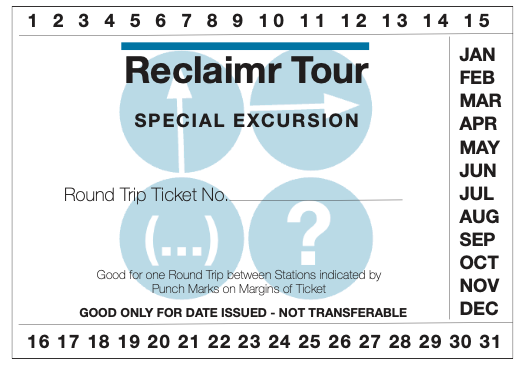
This course with Eduardo Staszowski and Nidhi Srinivas explored what the future of the Urban Commons can be as part of a transdisciplinary design lab initiative at the New School. My team’s focus was on understanding reclaimed spaces and their potential, so we created a speculative design tour company (‘Reclaimr’) to tour some of the potential spots of reclamation in New York City. This helped inspire my thesis by thinking about the role of community-based interventions ‘from the bottom up’ and how communities work to protect one another and share resources – and how such systems often emerge when systems are under threat.

Thesis Prep
This course, led by Lara Penin, Clive Dinot, Eduardo Staszowski and Elliott Montgomery, was the first part of our thesis, and helped us explore our thesis topics in a ‘cluster’ – an affinity group where our group chose to explore identity and what it means to have a transient identity in the 21st century. Our final project was called ‘Playing Identities’, involving interactive spaces for students in high schools to explore issues related to migration, mental illness, gender, stigma and other sensitive topics. This helped inspire my thesis by thinking about issues of scale and identity, and solidified some of the materials and approaches I wanted to explore for the final portion of my thesis. The end was in sight…

Thesis
The two-year master’s comes to a close with a successful thesis defense. My thesis explores the role of design in addressing the stigma of mental illness, and I ended up creating a micro-site devoted to this intensive 4-month-long solo journey to explore design, community, resilience, identity, empowerment, and the future. View the thesis page
Was it exhausting? Yes. Do I regret any of it? No. Does the world need more transdisciplinary thinking? Absolutely.
Honors
Dean’s Merit scholarship, Dean’s Office award for Graduate Student Travel, Presenter, ‘Speculative Design and Theater’ research paper (American Society of Theater Research), Presenter, MFA thesis at Service Design Network conference, Content creator, ‘Hum: a tool to support end of life care for families’ (selected by faculty to be featured on Parsons Web site, and in ‘Participatory Design and Social Transformation: Images and Narratives of Crisis and Change by’, authored by John Bruce)
The whole purpose of education is to turn mirrors into windows – Sydney J. Harris